
Type Hand Tool Kit
Usage Industrial
Country of Origin Made in India
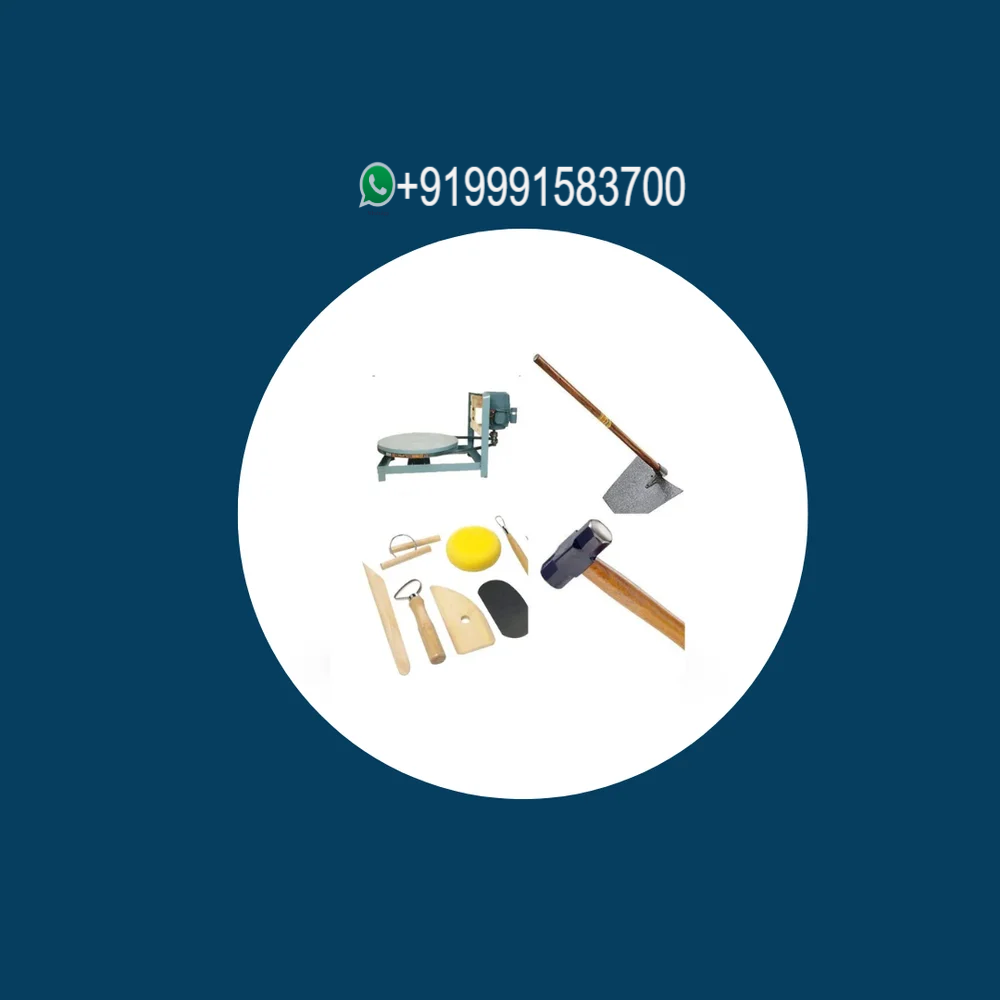
A Potter (Kumhaar) Toolkit is a collection of tools specifically designed for potters to help them create, shape, and finish clay pottery. The toolkit enables potters to efficiently work with various forms of pottery, from simple household items to more intricate decorative pieces. The toolkit typically includes essential tools for molding, shaping, decorating, and firing clay. Here’s a brief overview of the key components typically found in a Potter (Kumhaar) Toolkit:
1. Basic Clay Shaping Tools
Potter’s Wheel: A rotating tool that allows potters to shape and mold clay into symmetrical forms. It is one of the most important tools in pottery making, especially for creating round or curved pieces like bowls, pots, and vases.
Ribs and Scrapers: Tools used to smooth, shape, and refine the surface of the clay. Ribs can be made from wood, metal, or plastic and are used to manipulate the clay while it is on the wheel or during hand-building.
Wire Cutter: A wire used to cut large blocks of clay into manageable pieces or to slice pottery from the wheel after shaping.
2. Molding and Shaping Tools
Modeling Tools: Small, hand-held tools made of wood, metal, or plastic, used for detailed shaping and carving designs into the clay. These tools help create textures and patterns on the surface of the pottery.
Handbuilding Tools: Tools such as rolling pins, slats, and boards used in handbuilding techniques (creating pottery without a wheel), especially for making slabs, coils, or pinch pots.
Stamping Tools: Used for imprinting designs or patterns on the clay surface, which can add texture or decoration to the pottery.
3. Clay Preparation Tools
Clay Cutter/Knife: Used for cutting, trimming, or carving clay. It can also be used for slicing off excess clay during the shaping process.
Clay Rolling Pin: Used to flatten clay into uniform thickness, useful for handbuilding pottery.
Sponges: Soft sponges are used to smooth out surfaces, control moisture, and add texture to the pottery during the shaping process.
Water Container: A container to hold water for moistening the clay and preventing it from drying out while shaping.
4. Trimming and Finishing Tools
Trimming Tools: After pottery has been shaped and dried to a leather-hard state, trimming tools (such as loop tools and carving knives) are used to refine the shape, remove excess clay, and smooth out surfaces.
Needle Tool: A thin, pointed tool used for precise cutting, scoring, or decorating small details.
Clay Smoothing Tools: Used to smooth out rough edges or surfaces on finished pieces to prepare them for glazing or firing.
5. Firing Tools
Kiln: A high-temperature oven used for firing pottery to harden it and make it durable. The kiln is essential for firing both the bisque (pre-glaze) and glazed pottery.
Kiln Shelf: Used to place pottery inside the kiln for firing, allowing pieces to be fired at the correct temperature without touching each other.
Thermocouple or Pyrometer: Used to monitor and control the temperature inside the kiln during firing to ensure the pottery is heated evenly and properly.
6. Glazing Tools
Glaze Brushes: Used for applying glaze to the pottery after firing. These brushes help create a smooth and even coating of glaze.
Glaze Dipping Tools: A set of tools or containers used for dipping pottery into glaze for an even coating.
Sprayer for Glaze: Some potters use sprayers to apply glaze, which creates a different texture and finish compared to brushing or dipping.