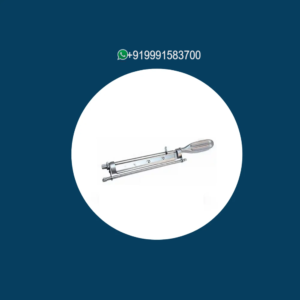


Material Stainless Steel
Sterile/ Non Sterile Non Sterile
Disposable/ Reusable Reusable
Usage/Application Hospital
Packaging Type Box
Country of Origin Made in India
Lacrimal probes and dilators are specialized tools used in ophthalmology for diagnosing and treating conditions affecting the tear drainage system of the eye. They play a crucial role in procedures aimed at assessing and opening obstructed lacrimal ducts and canaliculi. Here’s an overview of lacrimal probes and dilators:
Lacrimal Probes:
Diagnostic Tool: Used to evaluate the patency (openness) of the lacrimal drainage system.
Various Sizes: Available in different sizes to accommodate variations in lacrimal duct and canaliculi anatomy.
Smooth Tips: Designed with smooth, rounded tips to minimize trauma during insertion and manipulation.
Material: Typically made from medical-grade stainless steel or other biocompatible materials.
Sterilization: Capable of withstanding sterilization for repeated use in surgical settings.
Common Uses: Often used in procedures such as lacrimal probing to detect and treat blockages in tear drainage pathways.
Lacrimal Dilators:
Therapeutic Tool: Used to dilate or enlarge lacrimal ducts and canaliculi to restore normal tear drainage.
Graduated Sizes: Available in a range of sizes to accommodate different levels of obstruction and patient anatomy.
Design: Usually designed with a smooth, tapered tip for gradual dilation without causing injury to delicate tissues.
Material: Made from durable, sterilizable materials suitable for surgical use.
Applications: Used in procedures like balloon dacryoplasty or as part of lacrimal stenting to treat chronic lacrimal duct obstruction.
Applications:
Dacryocystorhinostomy (DCR): Procedures to create a new tear drainage pathway from the lacrimal sac to the nasal cavity.
Canalicular Obstruction: Treatment of blockages in the lacrimal canaliculi.
Chronic Dacryocystitis: Inflammation and infection of the lacrimal sac requiring surgical intervention.
Lacrimal probes and dilators are essential tools in the armamentarium of ophthalmologists and oculoplastic surgeons, enabling them to diagnose and treat a range of lacrimal system disorders effectively. Their design and functionality are crucial in restoring normal tear drainage and improving patient comfort and ocular health.