
Type Hand Tool Kit
Usage Industrial
Country of Origin Made in India
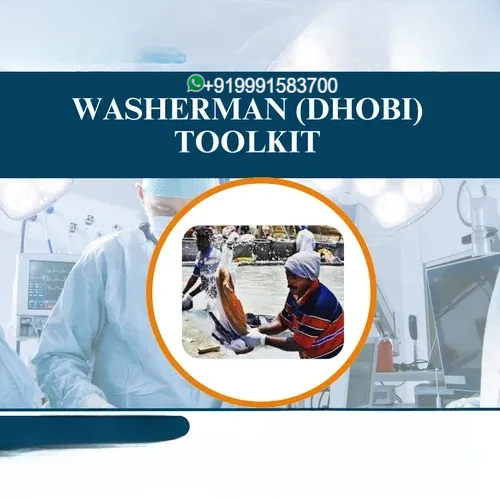
A Washerman (Dhobi) Toolkit is a collection of tools and equipment used by washermen (Dhobi) to clean, wash, dry, and iron clothes, often as part of a laundry or garment care service. This toolkit is designed to efficiently handle the various steps of the laundry process, including washing, pressing, and folding garments. The tools in the Dhobi toolkit ensure that clothes are cleaned properly, stains are removed, and fabrics are maintained well.
Here’s a brief overview of the key components typically found in a Washerman (Dhobi) Toolkit:
1. Washing Tools
Washing Tubs or Containers: Large tubs or basins used for soaking and washing clothes. Traditional Dhobis may use large wooden or metal tubs, while modern ones might use plastic or stainless steel containers.
Soap or Detergent: A key ingredient for washing clothes, often in the form of bars, powder, or liquid. Detergents are used for removing dirt, stains, and odors from garments.
Washing Brushes: A stiff-bristled brush used to scrub and remove dirt or stains from clothes, especially for heavily soiled items. Brushes can be used to clean collars, cuffs, and other stubborn areas.
Stain Remover: Chemicals or solutions that are applied to specific stains (like oil, ink, or food stains) before washing the clothes to ensure thorough cleaning.
2. Rinsing and Drying Tools
Buckets or Large Bowls: Used for rinsing clothes after washing. Multiple rinses help remove detergent residue and dirt from the fabric.
Wringing Tools: Hand-operated wringers or mechanical machines that help to remove excess water from clothes after washing. Wringers ensure clothes are damp but not overly wet, which is important for drying.
Clothlines or Drying Racks: Lines or stands for hanging clothes to dry. In traditional setups, a simple rope or wire is used to hang clothes, while modern Dhobis might use racks or drying stands.
Clothespins or Pegs: Small clips used to secure clothes to the clothline to prevent them from blowing away in the wind or slipping off.
Drying Sheets or Mats: Used for laying out wet clothes to dry, especially delicate garments or items that cannot be hung.
3. Ironing and Pressing Tools
Iron: The primary tool used for pressing clothes to remove wrinkles. Traditional irons are heated on a stove or with coal, while modern Dhobis often use electric irons for efficient pressing.
Ironing Board: A flat surface designed to provide support while ironing clothes. It helps ensure that garments are evenly pressed.
Spray Bottle: A small bottle used to spritz water onto clothes to help with ironing, particularly for fabrics that require a little moisture to smooth out wrinkles.
Pressing Cloth: A thin cloth used to cover delicate fabrics while ironing. This protects the fabric from direct heat and prevents any damage, like shine marks or scorching.
4. Folding and Storing Tools
Folding Board: A flat, rectangular tool used to fold clothes uniformly, ensuring neat and tidy garments.
Storage Baskets or Bags: Used to store freshly cleaned and pressed clothes until they are ready for delivery or pickup. Baskets help keep the clothes organized and prevent them from getting wrinkled.
Laundry Bins: Large bins or containers to collect dirty clothes before washing. These bins are also useful for separating clothes based on color or fabric type.
5. Miscellaneous Tools
Laundry Tags or Labels: Used to identify customers’ garments, especially in a large laundry operation. These may be tags attached to garments with the customer’s details or codes.